 Tips for Building
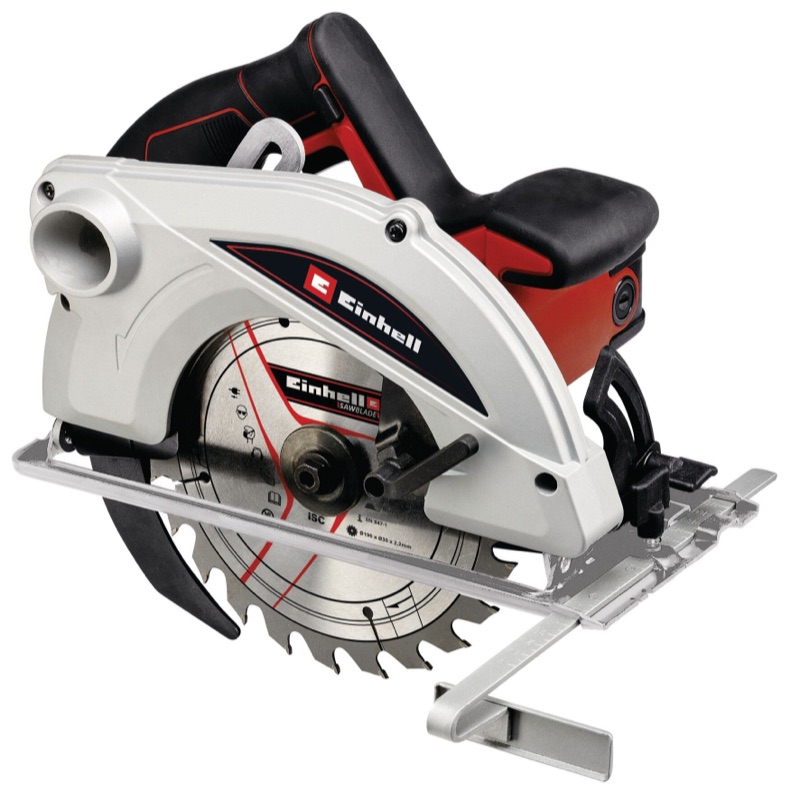
67 mm at 90°, 46 mm at 45°, guide rail compatibility and one of the lowest prices in the panel. The TC-CS 1410 has no weak figure, apart from noise in the upper middle.
What its figures are worth
- Cutting depth at 90° 30 %67 mm · 6.5/10
- Price per mm of cut 25 %1.4 USD per mm · 9.5/10
- Sound power LwA 20 %105 dB(A) · 6.5/10
- Weight 15 %4.3 kg · 8/10
- Cutting depth at 45° 10 %46 mm · 7/10
Every criterion in the scale could be calculated. Weighting: Cutting depth at 90° 30 %, Price per mm of cut 25 %, Sound power LwA 20 %, Weight 15 %, Cutting depth at 45° 10 %.
Choose it if
- A first light framing or formwork job.
- A tight budget without giving up cutting depth.
Skip it if
- Noise: 105 dB(A).
- Vibration published per handle, with no material stated.
Published specifications
| Specification | Stated value |
|---|---|
| Cutting depth at 90° | 67 mm |
| Cutting depth at 45° | 46 mm |
| Blade diameter | 190 mm |
| Input power | 1,410 W |
| No-load speed | 5,500 tr/min |
| Sound power LwA | 105 dB(A) |
| Vibration | 2.03 m/s² |
| Weight | 4.3 kg |
| Guide rail compatible | yes |
| Extraction port | yes |
Before the first cut
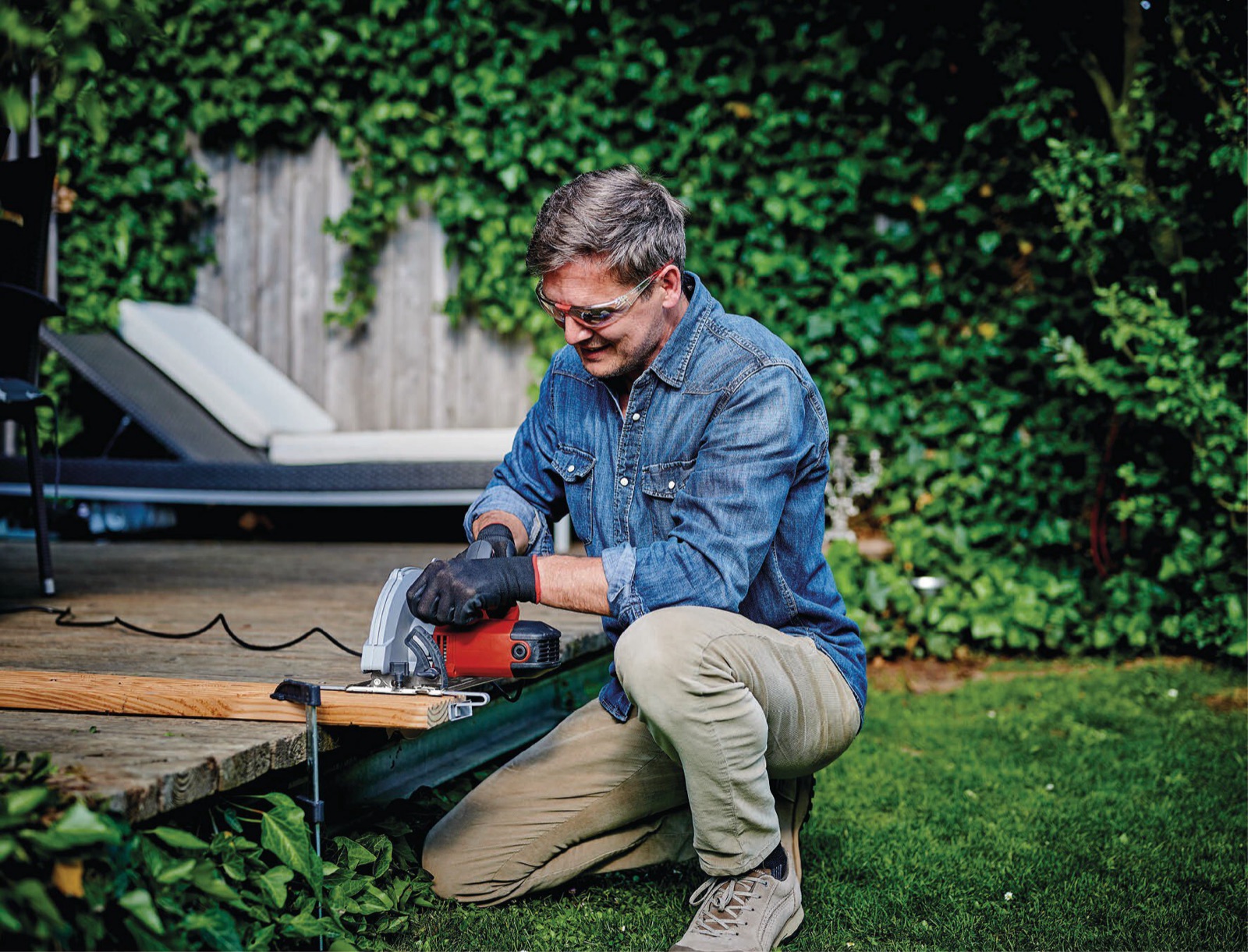
- Kickback is the main risk. It happens when the blade pinches in the kerf. Support the work on both sides so the kerf cannot close, keep the riving knife fitted, and never stand in line with the blade.
- The lower guard must spring back on its own. Never wedge it open.
- Unplug before changing the blade or adjusting the depth.
- Hearing and eye protection. Every saw here that publishes its noise exceeds 95 dB(A) of sound power, and the kerf throws dust back at the user.
- A mask for MDF and sheet material, whose fine dust irritates, and extraction connected where possible.
What the maker shows
Frequently asked questions
Where does this machine's score come from?
It is calculated, not awarded. Five measurable criteria are weighted, and each value is mapped onto a scale relative to the other machines in the comparison. For this machine, 100% of the scale could be applied: criteria the maker does not publish drop out rather than being replaced by an estimate.
What cutting depth do I need for framing?
A common rafter or joist is 63 mm thick: every saw in this comparison cuts it at 90° in one pass. For bevel cuts in 45 mm timber, check depth at 45°: it runs from 42 to 50 mm in this panel. For beams, you need a larger saw or two passes.
Do I need a guide rail?
For dead straight cuts in OSB or plywood sheets, a rail changes everything: the cut follows a straight edge rather than your hand. Several saws here accept one; each page says whether the maker states it.