Tips for Building
The highest score
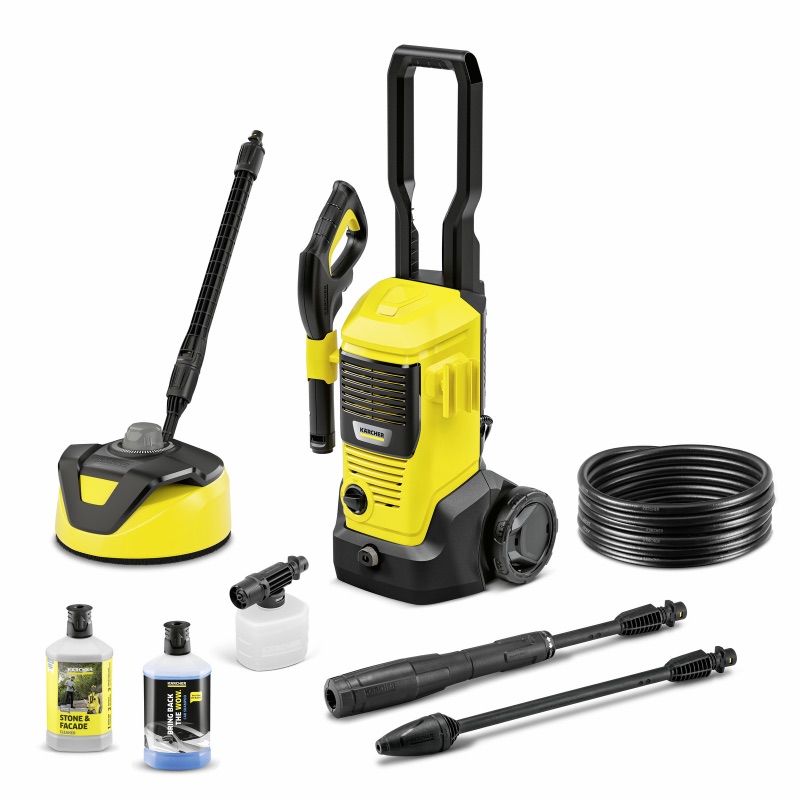
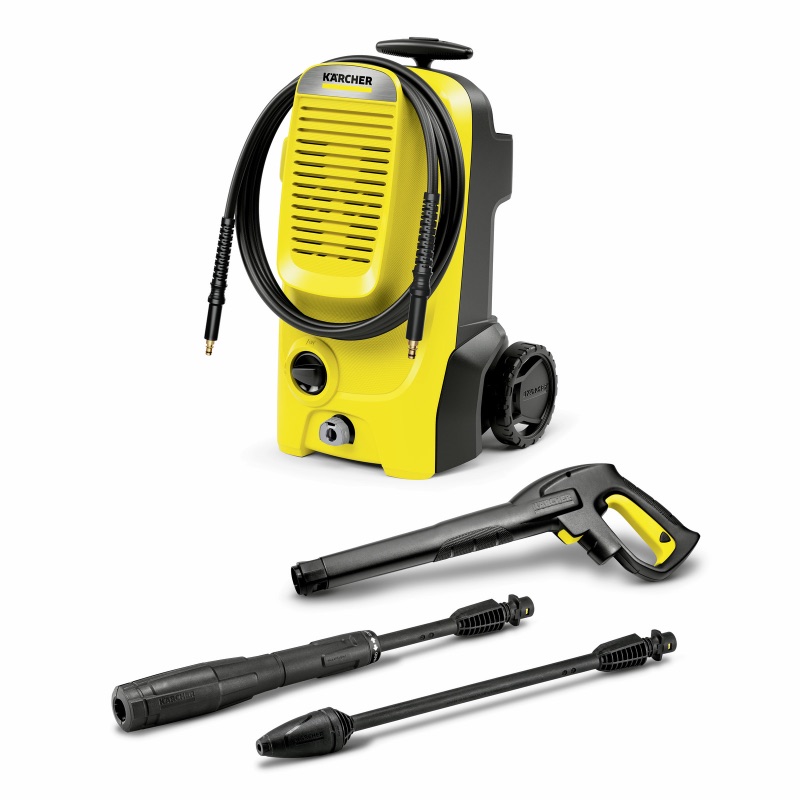
Kärcher K 5 Classic
8/10
score calculated from published figures
The most real power, in a light package
Scored comparison
A green patio, a render to freshen up, a crusted mixer, tools caked in mortar: a pressure washer always ends up earning its place on a build. And the two numbers printed large on the box are maximums, not what the machine sustains.
Affiliate link: we earn a commission if you buy through it, at no extra cost to you. It never affects our scores. How we make money
The highest score
8/10
score calculated from published figures
The most real power, in a light package
The cheapest kilowatt
7/10
score calculated from published figures
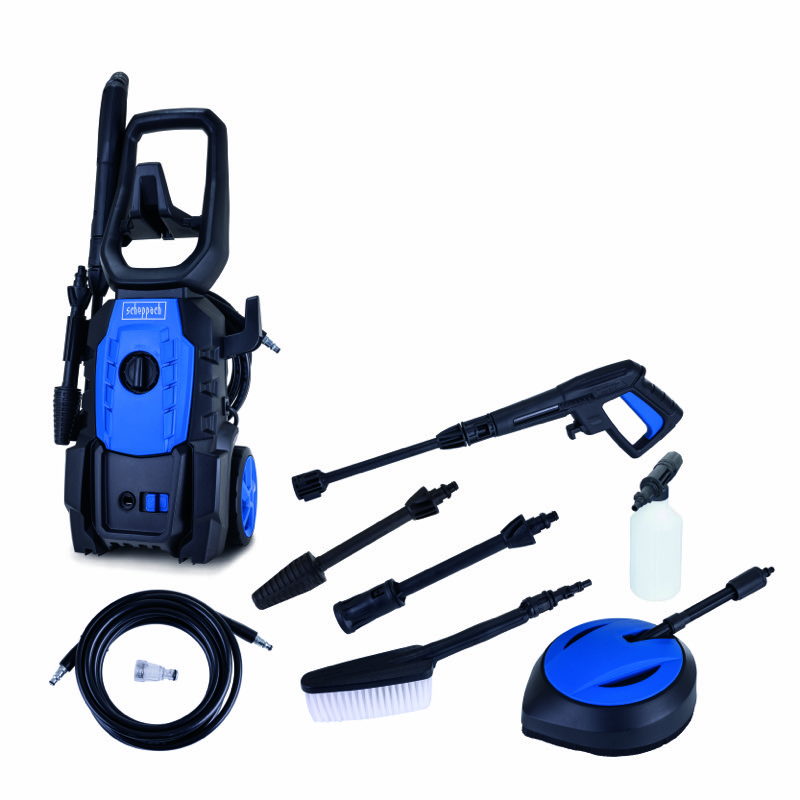
The cheapest kilowatt, by a distance
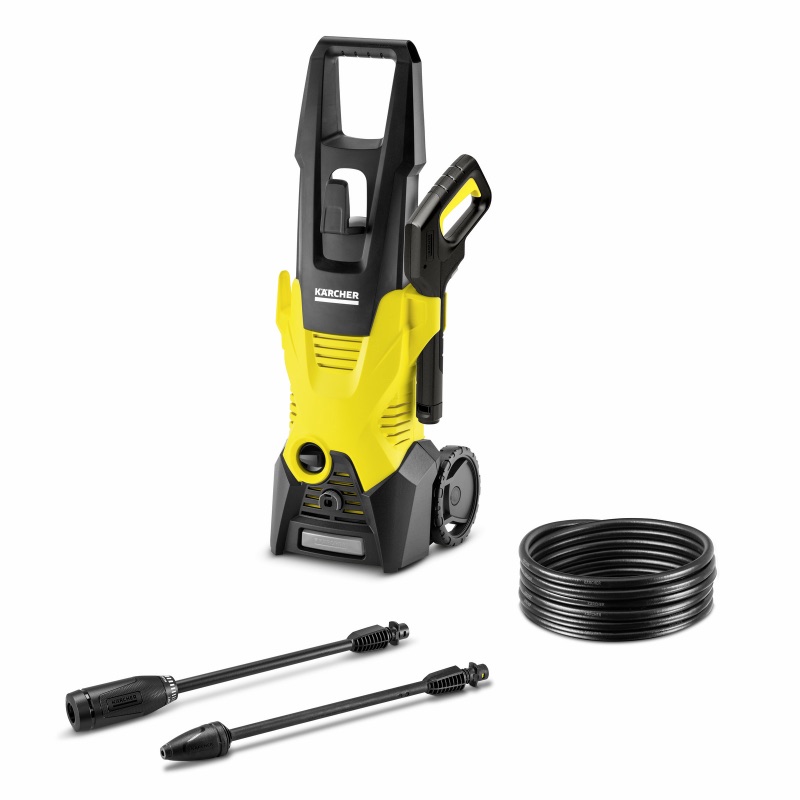
Look for rated pressure and rated flow. The standard requires them on the machine's rating plate, and they appear in the manual. The Kärcher K 3 advertises 120 bar; its manual gives 80 bar working pressure. In this comparison, rated pressure is 67 to 85 percent of the advertised figure.
11 of 11 machines
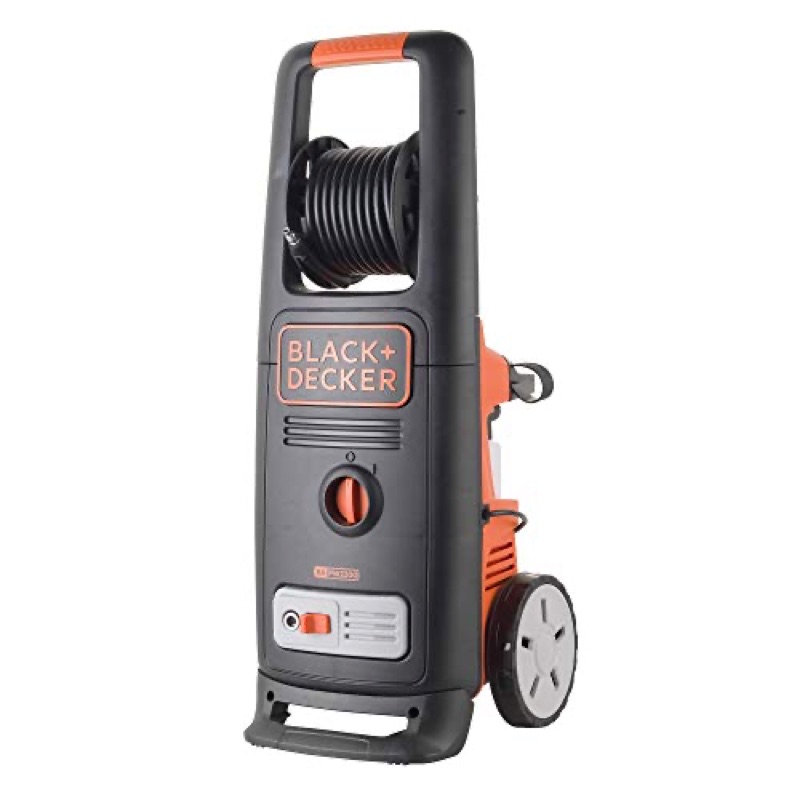
| Machine | Score | Rated hydraulic power | Retrieved price |
|---|---|---|---|
| 8/10 | 1,340 W | $256.70See on Amazon | |
| 7/10 | 1,208 W | $246.74See on Amazon | |
| 7/10 | 981 W | $177.06See on Amazon | |
| 7/10 | 1,247 W | $271.42See on Amazon | |
| 7/10 | 900 W | $67.18See on Amazon | |
| 6.5/10 | 1,100 W | $251.24See on Amazon | |
| 6.5/10 | 1,054 W | $173.74See on Amazon | |
| 6/10 | 733 W | $114.35See on Amazon | |
| 6/10 | 953 W | $224.31See on Amazon | |
| 6/10 | 967 W | $232.20See on Amazon | |
| Not scored: too few figures | not published on the page we consulted | $133.47See on Amazon |
No item matches these filters.
We have not run any of these machines, and we do not present anything as if we had. The score comes from five measurable criteria: rated hydraulic power 40 percent, price per hydraulic kilowatt 25 percent, sound power LwA 15 percent, weight 10 percent, hose length 10 percent. Each value is placed on a 4 to 10 scale against the other machines in the panel.
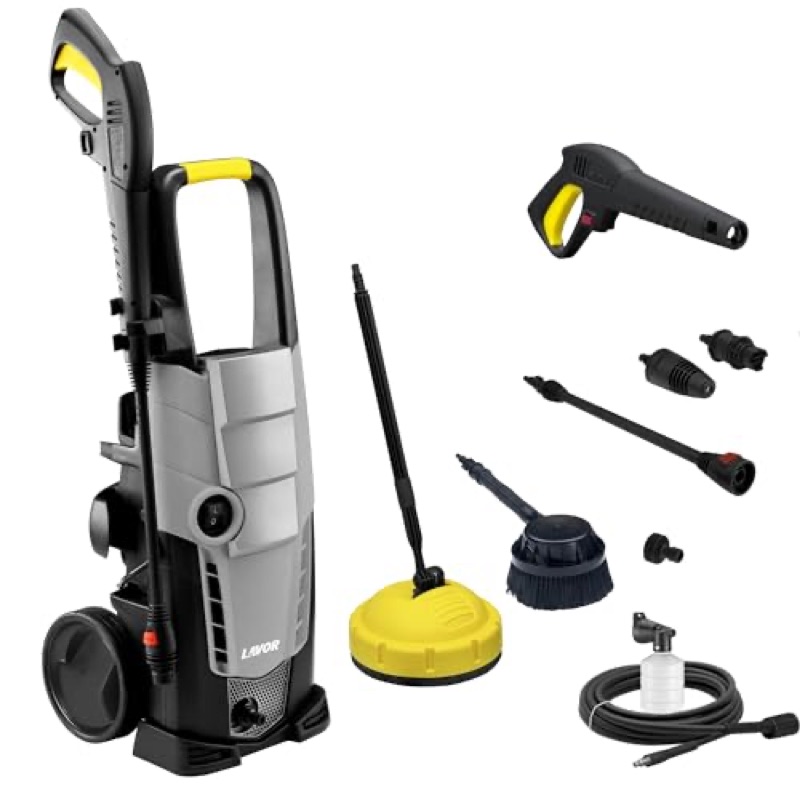
When a maker does not publish a figure, that criterion drops out and the remaining weights are renormalised. Without rated pressure and flow, no score is calculated: that is the case for the Lavor Galaxy 150, and its page says why.
What lifts moss off a slab is the energy the water carries, and that depends as much on flow as on pressure. A very high pressure jet with little flow pits the surface without cleaning it. Hydraulic power multiplies the two: pressure in bar × flow in litres per hour ÷ 36 gives watts.
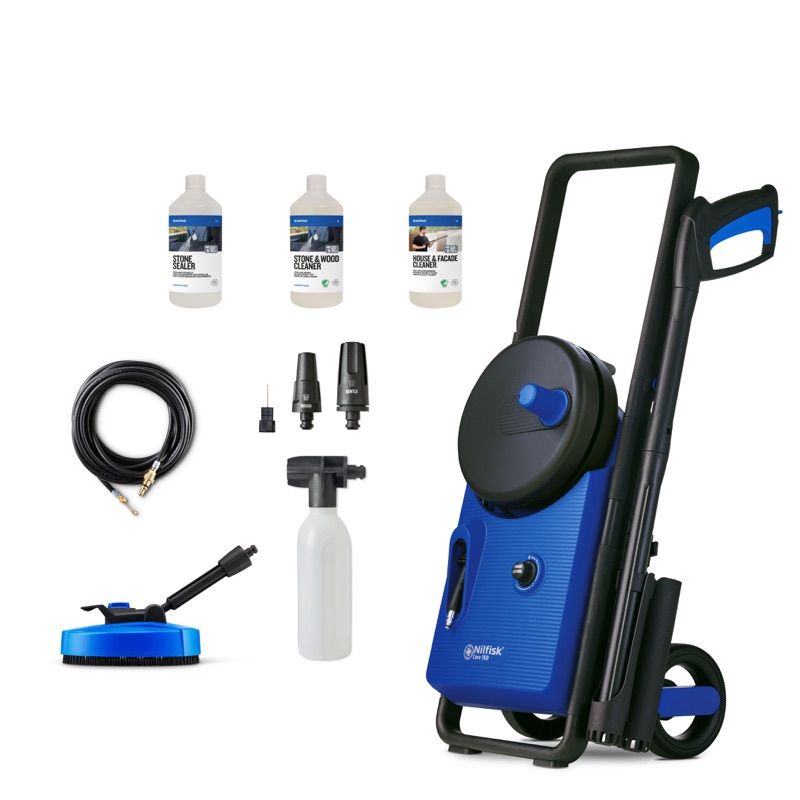
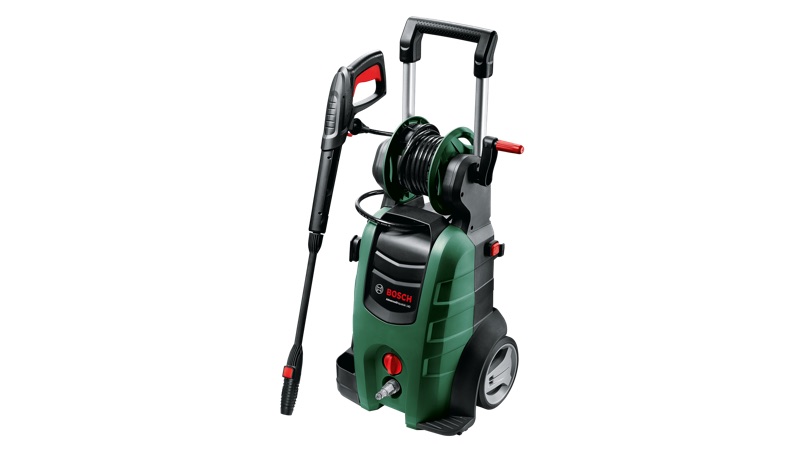
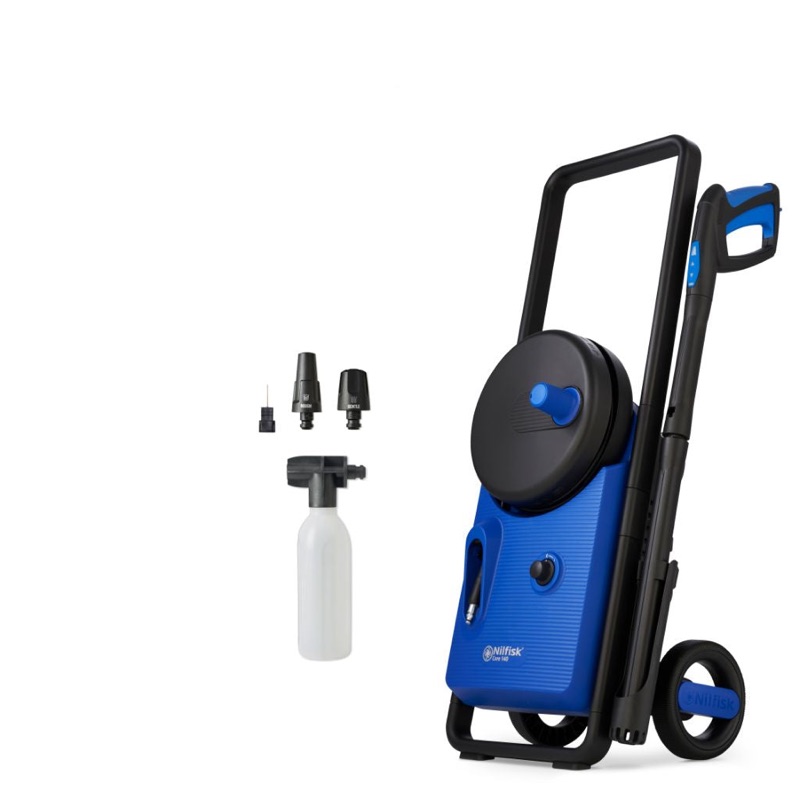
Worked out from the box figures, it always overstates. In this panel, rated hydraulic power is 53 to 71 percent of what maximum pressure and flow suggest. The Nilfisk Core 140 is at 53 percent, the Bosch AdvancedAquatak 140 at 71.
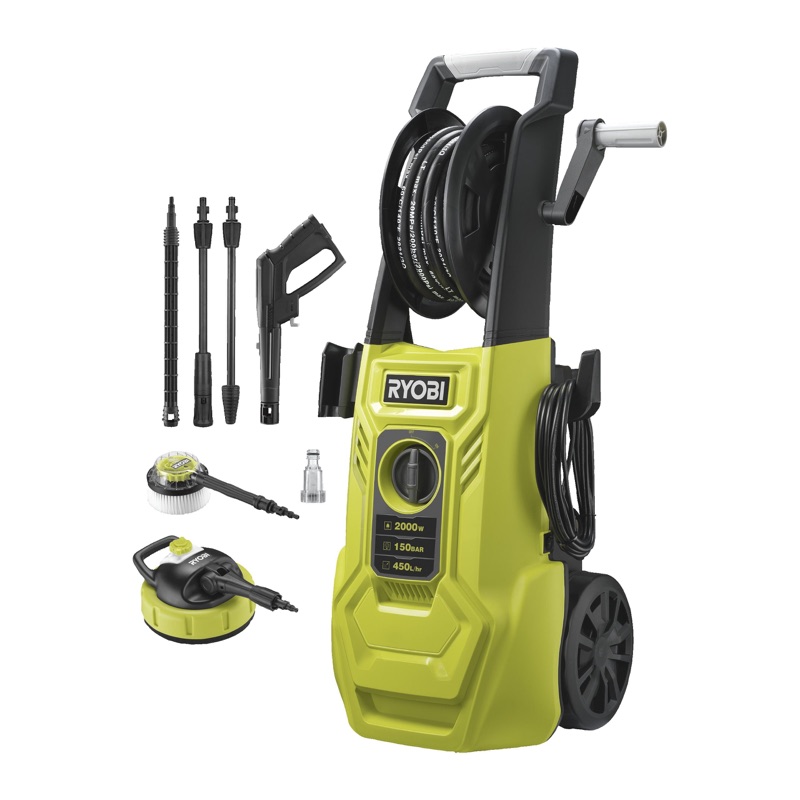
Almost never on the product page. Kärcher gives them in its manuals as working pressure, Bosch and Ryobi as rated pressure, Nilfisk in a PDF datasheet shared by several models. We read every manual, and each page says where the figure comes from.
Choosing the machine is one thing, using it another. Here are the pages where it comes up, with the steps in order and the rest of the kit.
Dig out, compact, form up, reinforce, pour, level, cure: seven steps and the machines that are better hired.
Read morePrepare the ground, set the supports, fix the joists, screw the boards, finish the edges: the steps of a deck that stays put.
Read moreLook at rated pressure and flow rather than the box figure. For a slabbed patio or a render, rated hydraulic power of around 1 kW, for example 110 bar at 330 l/h, does a clean job; below that, the machine suits garden furniture and bikes better. On render or soft timber, nozzle distance matters, not maximum pressure.
Yes, if it can draw from a tank: most of this panel can, up to 0.5 m of lift, with a suction hose fitted with a filter. That helps on a plot with no connection, using a rainwater butt. Each machine's page says whether the maker publishes it.
An induction motor is heavier and often described as more durable; a universal, brushed motor is lighter and cheaper. In this comparison only the Bosch AdvancedAquatak 140 states an induction motor, and it weighs 18 kg.